Author: admin

  • Why Everyone Is Talking About "Grocery Store Tourism" (And Why ScanitectAI Fits Right In)

    Why Everyone Is Talking About "Grocery Store Tourism" (And Why ScanitectAI Fits Right In)

    Forget the Eiffel Tower for a second.

    Picture this instead: You're wandering through a century-old market hall in Budapest. The ceiling arches above you like a cathedral. Vendors shout in Hungarian. You have no idea what half of these products are, but you're absolutely hooked.

    Welcome to grocery store tourism. It's weird. It's wonderful. And in 2026, it's everywhere.

    What Exactly Is Grocery Store Tourism?

    Some call it "Shelf Discovery." Others just call it "the supermarket detour."

    The concept is simple. Instead of rushing to museums and monuments, you slow down. You explore local grocery stores, markets, and convenience shops. You browse the aisles. You taste unfamiliar snacks. You watch what locals actually put in their baskets.

    It sounds mundane. It's anything but.

    Grocery stores are cultural goldmines. They reveal what people really eat, not what's marketed to tourists in overpriced restaurants. They show you farming traditions, regional flavors, and everyday rituals that guidebooks skip entirely.

    And here's the kicker: nearly 80% of Indian travelers now visit local supermarkets when traveling abroad. That's not a niche hobby anymore. That's a movement.

    Traveler uses smartphone to explore exotic snacks in local grocery store, highlighting grocery tourism trend

    Why Is Everyone Obsessed With This Trend?

    Three words: authentic, affordable, shareable.

    It's authentic. You're not getting a curated, sanitized version of a culture. You're seeing what a grandmother buys for Sunday dinner. What kids grab after school. What ingredients make that neighborhood smell so incredible at 6 PM.

    It's affordable. Fine dining adds up fast. A wander through a Japanese konbini? Practically free. You get cultural immersion without draining your travel budget.

    It's shareable. Social media has turned snack-hunting into an art form. Those 7-Eleven haul videos from Tokyo and Seoul? Millions of views. Supermarket runs have become mini travel guides, and everyone wants in on the action.

    Travel experts now list grocery tourism as one of the defining trends for 2026. It reflects a bigger shift: travelers want passion-led, personal experiences. Not packaged tours. Not cookie-cutter itineraries.

    Real discovery. On their own terms.

    The Problem No One Talks About

    Here's the catch.

    You walk into a stunning 19th-century market hall. The architecture takes your breath away. The history is practically dripping from the walls.

    But you have no idea what you're looking at.

    Who built this place? Why does the ironwork look that way? What happened here a hundred years ago? Is that beautiful corner building famous for something, or just beautiful?

    Traditional travel guides won't help. They're too broad. Too generic. Too focused on the "top 10 attractions" that everyone already knows.

    And let's be honest, Googling every building you find intriguing kills the spontaneity. You wanted an adventure, not a research project.

    This is where most grocery tourists hit a wall. The experience is immersive, sure. But it's also incomplete.

    You're surrounded by stories you can't access.

    Interior view of historic 19th-century European market hall, emphasizing cultural exploration and stories

    Enter ScanitectAI: Your Curiosity Companion

    Imagine pointing your phone at that market hall entrance.

    In seconds, you know everything. The architect who designed it. The year it opened. The architectural style. The historical events that shaped it.

    No typing. No searching. No sifting through Wikipedia rabbit holes.

    Just point. Scan. Discover.

    That's ScanitectAI in action.

    ScanitectAI uses advanced image recognition to identify buildings, landmarks, and architectural details in real time. It doesn't just tell you what something is. It tells you the story behind it.

    And that changes grocery store tourism completely.

    Suddenly, that old market building isn't just a pretty backdrop for your snack haul. It's a living piece of history. The ironwork? Art Nouveau, installed in 1897. The tile mosaics near the entrance? Restored after WWII damage. The vendor stalls? Arranged in the same layout for over a century.

    You're not just shopping anymore. You're exploring.

    How ScanitectAI Elevates the Grocery Tourism Experience

    Let's get practical.

    Here's how ScanitectAI fits into your next grocery store adventure:

    1. Identify Market Buildings Instantly

    Many of the world's best food markets are housed in historic buildings. Think Budapest's Great Market Hall. Barcelona's La Boqueria. Seattle's Pike Place.

    These aren't just shopping destinations. They're architectural landmarks.

    With ScanitectAI, you can scan the facade before you even step inside. Learn about the building's origins, its design influences, and the stories embedded in its walls.

    Context transforms the experience. You're no longer a tourist grabbing snacks. You're someone who understands the place.

    2. Discover Hidden Gems Nearby

    Grocery tourism doesn't stop at the supermarket doors.

    The best markets are surrounded by fascinating architecture. Old warehouses. Historic storefronts. Iconic corner buildings.

    ScanitectAI helps you identify what catches your eye, without planning ahead. That intriguing building across the street? Scan it. That ornate doorway you passed on the way in? Scan it.

    Spontaneous curiosity, satisfied instantly.

    Smartphone displaying instant building identification, showcasing ScanitectAI’s real-time discovery technology

    3. Go Beyond Food Photos

    Everyone snaps pictures of colorful produce and exotic snacks.

    But imagine pairing those food shots with actual architectural knowledge. Your travel content becomes richer. More interesting. More memorable.

    "Tried this wild fruit at a market built in 1902 by the same architect who designed the city's opera house."

    That's a story worth sharing.

    4. Travel Lighter, Discover More

    No more lugging around guidebooks. No more pre-trip research marathons.

    ScanitectAI fits in your pocket. It works on-demand. You explore freely, and the knowledge follows.

    This is travel in 2026. Flexible. Curious. Empowered.

    The Future of Curious Travel

    Grocery store tourism isn't a gimmick. It's a signal.

    Travelers are done with surface-level experiences. They want depth. They want stories. They want to feel like explorers, not passengers on a conveyor belt of attractions.

    And technology is finally catching up to that desire.

    Tools like ScanitectAI bridge the gap between curiosity and knowledge. They turn every wandering moment into an opportunity for discovery. They put the power of context in your hands, literally.

    So yes, the Eiffel Tower is nice. The Colosseum is impressive. The Grand Canyon is grand.

    But that 120-year-old market hall where you found the best cheese of your life? The one with the stunning Beaux-Arts facade and the story about the fire that nearly destroyed it in 1943?

    That's the memory you'll keep forever.

    Historic market building at dusk with orange-lit windows, capturing the atmosphere of grocery tourism adventures

    Ready to Explore Differently?

    Grocery store tourism is booming for a reason. It's real. It's affordable. It's endlessly surprising.

    And with ScanitectAI, it's also endlessly informative.

    Next time you travel, skip the generic itinerary. Wander into a local market. Point your phone at the building that catches your eye.

    Scan the building. Discover the story.

    That's modern exploration.

    That's travel in 2026.

    Curious? Visit ScanitectAI and see how it works for yourself.
  • How to Learn the Story Behind Any Landmark in Under 30 Seconds

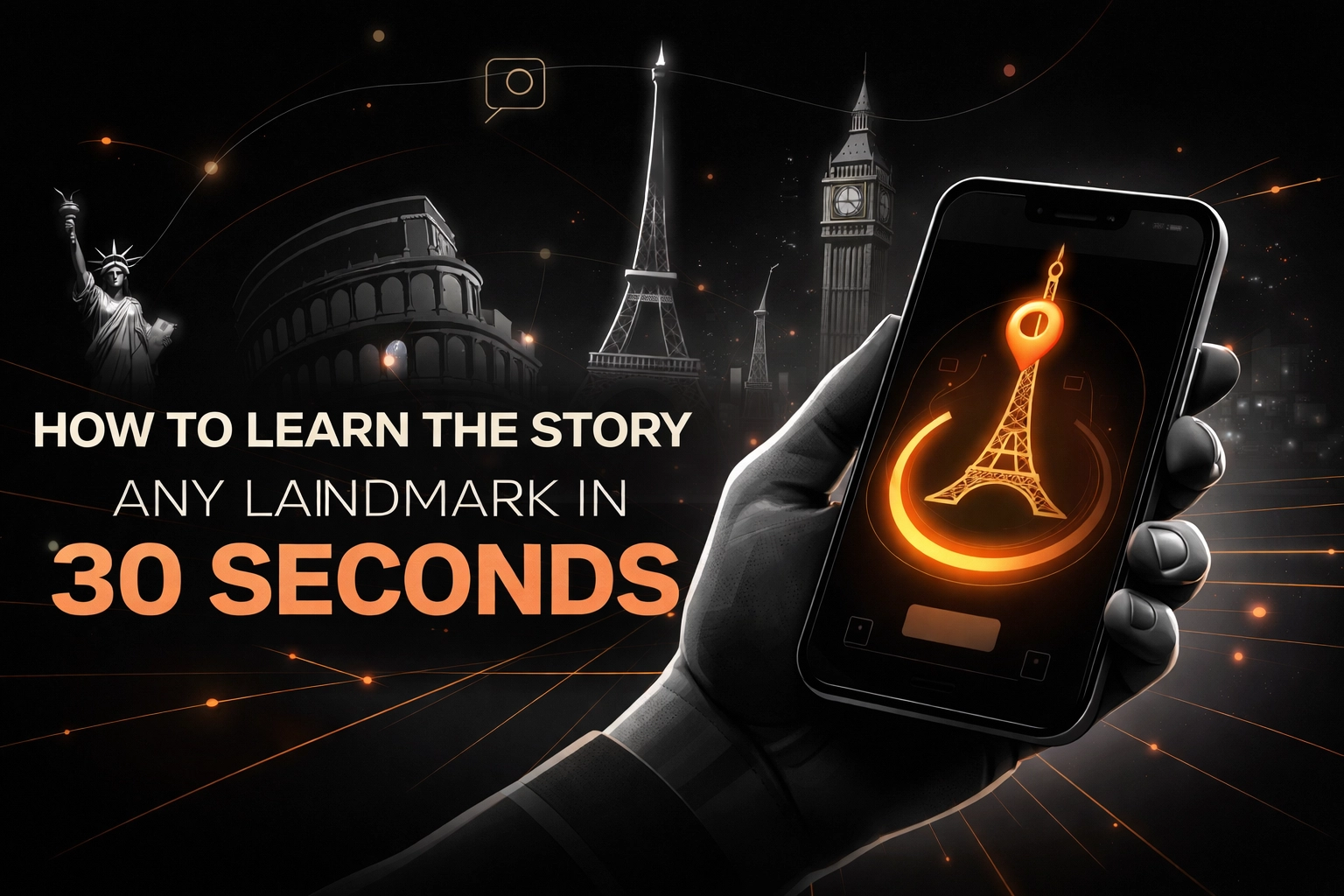
    How to Learn the Story Behind Any Landmark in Under 30 Seconds

    You're standing in front of a stunning building. Intricate stonework. Towering columns. Clearly important.

    But you have no idea what it is.

    Sound familiar?

    You could pull out your phone. Type a clunky description into Google. Scroll through results. Click a Wikipedia link. Skim paragraphs of text. Maybe find what you're looking for. Maybe not.

    By then? The moment's gone. Your travel buddy is already three blocks ahead. And that building remains a mystery.

    There's a better way. A faster way. A way that takes literally 30 seconds or less.

    Let's break it down.

    The Old-School Methods (And Why They Fall Short)

    Before we dive into the good stuff, let's acknowledge the traditional approaches. They work. Sort of. But they come with frustrations.

    Reading Plaques and Signage

    Most landmarks have them. Small metal plates with tiny text. Sometimes weathered. Sometimes in a language you don't speak. And often? They're positioned where 47 other tourists are already standing.

    Plus, not every interesting building has a plaque. That gorgeous Art Deco apartment building? That quirky church tucked down a side street? No signage in sight.

    Googling It

    The classic move. But here's the problem: you need to know what to search. "Old building with columns in Rome" isn't exactly a precise query. You'll spend minutes scrolling through irrelevant results before finding anything useful.

    Frustrated tourist using a smartphone to identify a historic building in a busy European plaza, highlighting travel discovery challenges

    QR Codes

    These are popping up at more landmarks. Scan the code. Get the info. Simple enough.

    When they exist. And when they work. And when they're not faded beyond recognition or blocked by construction scaffolding.

    Guided Tours

    Great for deep dives. Terrible for spontaneous exploration. You're locked into someone else's schedule. Someone else's route. Someone else's pace.

    Sometimes you just want answers. Right now. On your terms.

    The 30-Second Solution: AI-Powered Landmark Recognition

    Here's where things get exciting.

    Imagine this: You see a building that intrigues you. You pull out your phone. Point your camera. Snap.

    Within seconds, you know everything. The name. The architect. The year it was built. The historical significance. The stories that make it matter.

    No typing. No searching. No guessing.

    This is what AI landmark recognition technology delivers. And it's changing how modern explorers experience the world.

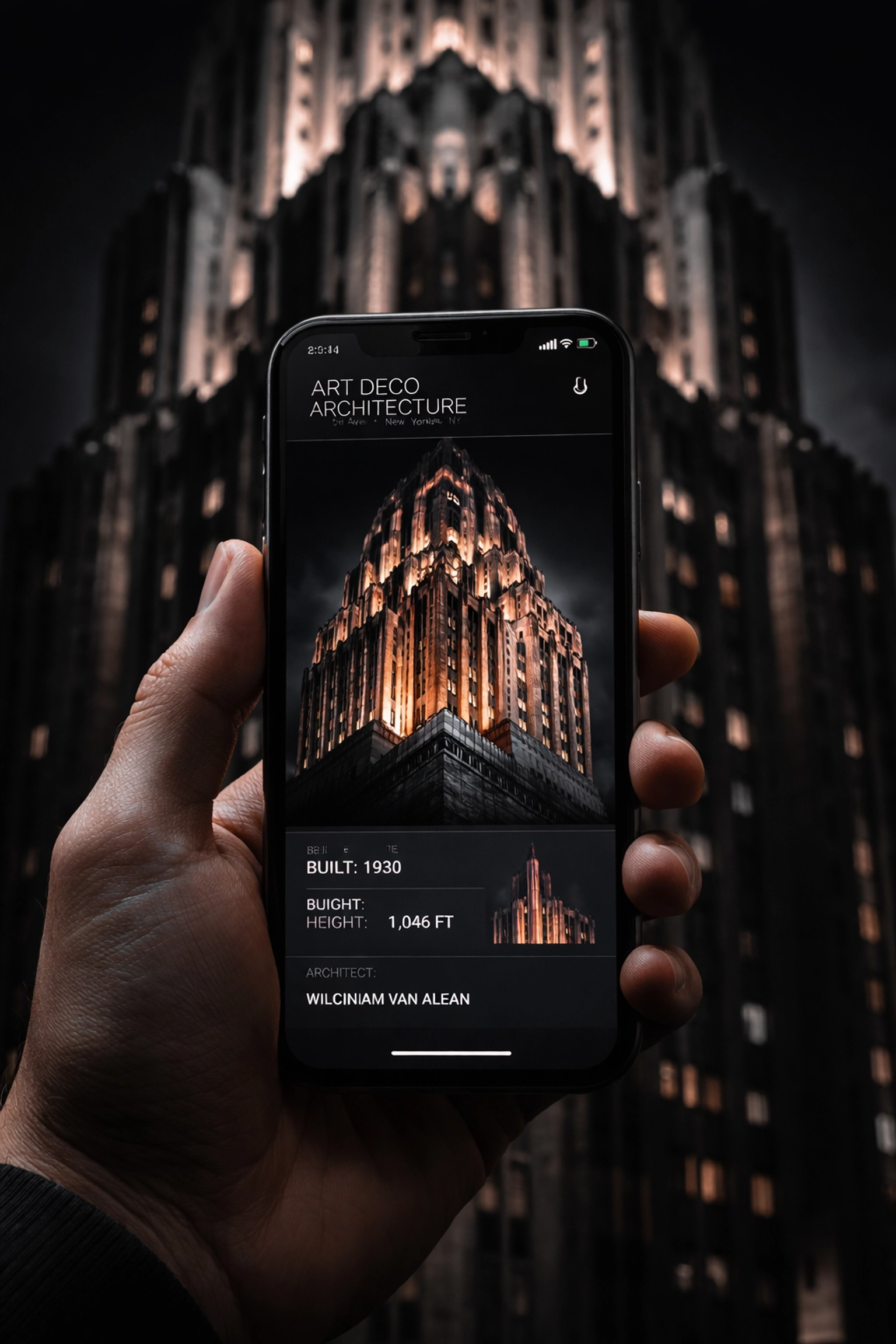
    Smartphone displaying landmark details in front of an Art Deco building, illustrating instant AI-powered landmark recognition for travelers

    How Does It Actually Work?

    The technology behind instant landmark recognition is fascinating. But you don't need a computer science degree to appreciate it.

    Here's the simple version:

    1. You take a photo of any building or landmark
    2. AI analyzes the image using advanced visual recognition
    3. The system matches it against vast databases of architectural and historical information
    4. You receive the story delivered instantly to your screen

    The AI uses something called convolutional neural networks. Fancy term. But what it means for you? The system can identify buildings from almost any angle, in various lighting conditions, even partially obscured.

    It's like having an expert architectural historian in your pocket. One who never gets tired. Never judges your questions. And responds in seconds.

    Five Tips for Mastering Quick Landmark Discovery

    Ready to become a pro at uncovering stories on the fly? These strategies will help you get the most out of modern discovery tools.

    1. Capture the Distinctive Features

    When photographing a landmark, focus on what makes it unique. Ornate doorways. Unusual rooflines. Decorative elements. The more distinctive the feature, the faster and more accurate the identification.

    A straight-on shot of the entire facade works great. But don't be afraid to capture interesting details too.

    2. Check Multiple Angles

    Sometimes one photo doesn't tell the whole story. If your first snap doesn't yield results, try a different perspective. Walk around the corner. Step back for a wider view. Get closer to architectural details.

    Different angles can reveal different information about the same structure.

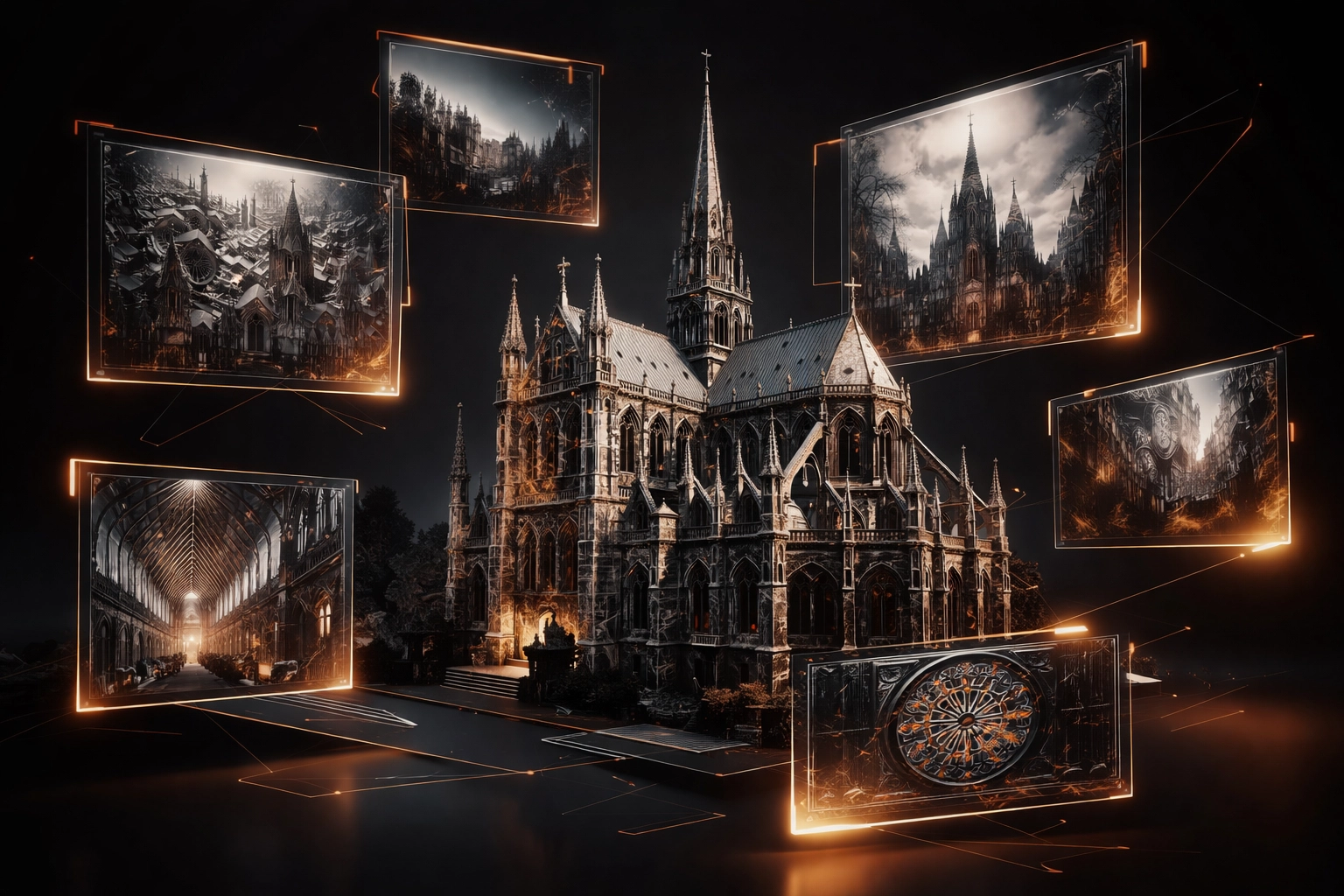
    Multiple views of a historic cathedral reveal unique architectural details, showing the benefit of capturing different angles for landmark discovery

    3. Save Stories for Later

    Discovered something fascinating but don't have time to read the full history right now? Save it.

    Most landmark recognition apps let you bookmark discoveries. Build your own personal collection of architectural stories. Review them later over coffee. Share them with friends back home.

    Your explorations become a curated library of discoveries.

    4. Go Beyond the Famous Landmarks

    Sure, you can learn about the Eiffel Tower or the Colosseum. But the real magic? Finding stories behind buildings you'd otherwise walk right past.

    That apartment building on the corner might have housed a famous writer. That unassuming church might have survived three wars. That bridge might have a tragic love story attached to it.

    Every building has a story. Now you can actually hear them.

    5. Let Curiosity Guide You

    This is the big one.

    With instant landmark recognition, you don't need a rigid itinerary. You don't need to research for hours before a trip. You can simply wander. Explore. Follow what catches your eye.

    See something interesting? Scan it. Learn its story. Move on. Or dive deeper.

    You're in control. Your curiosity leads the way.

    Why 30 Seconds Matters

    You might wonder: why the emphasis on speed?

    Because travel moments are fleeting. Because attention spans are short. Because the best discoveries happen spontaneously.

    When you can learn a landmark's story in 30 seconds:

    • You stay present in the moment
    • You explore more ground in less time
    • You satisfy curiosity instantly instead of letting it fade
    • You make connections between places as you walk
    • You transform passive sightseeing into active discovery

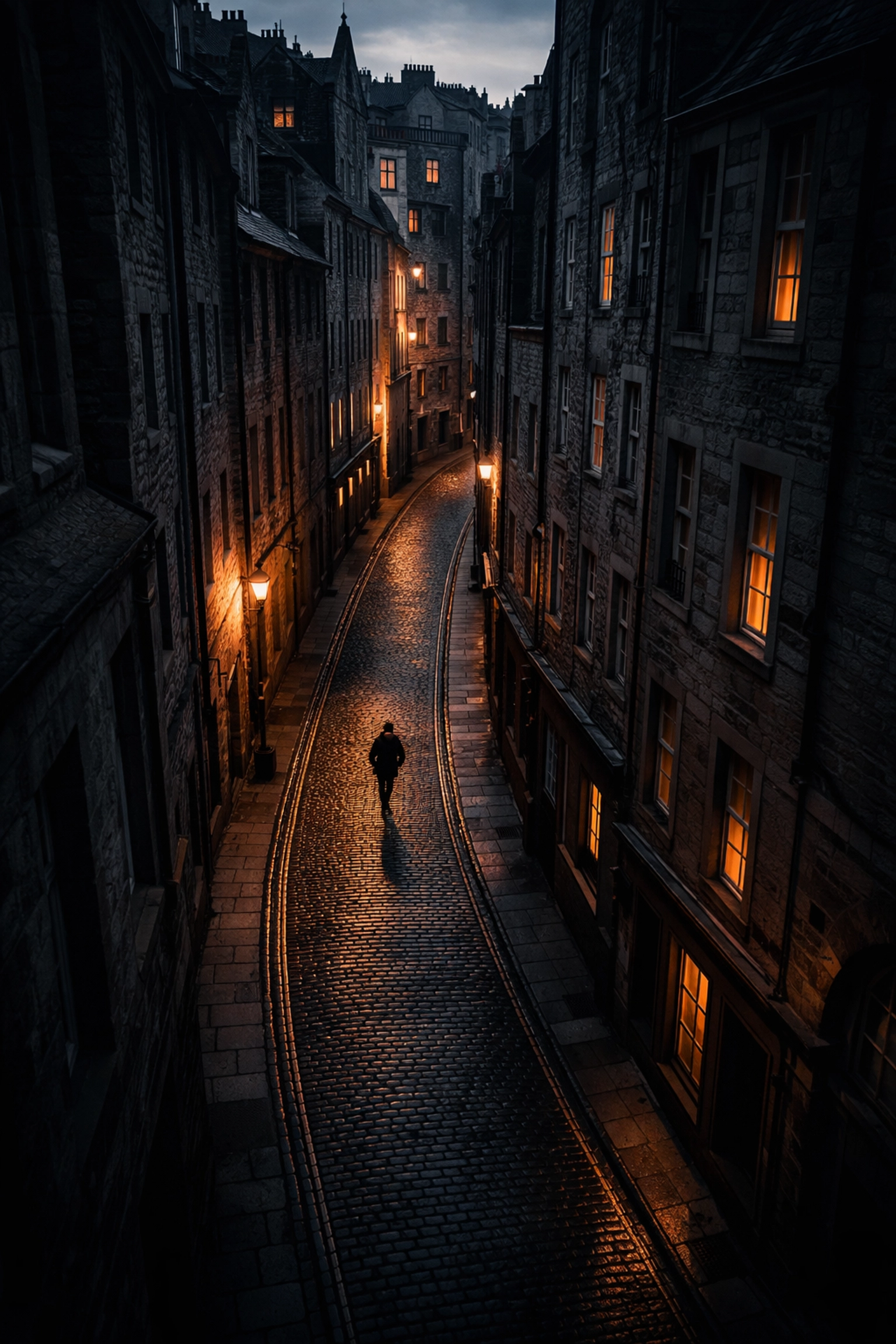
    Aerial view of a winding European street at dusk with dramatic lighting, evoking the wonder of spontaneous urban exploration

    Speed doesn't mean shallow. It means accessible. The 30-second summary opens the door. If something fascinates you, you can always dig deeper.

    The Future of Exploration Is Here

    Travel is being redefined. Not by bigger tour buses or fancier hotels. By technology that puts knowledge at your fingertips.

    The modern explorer doesn't need a guidebook weighing down their bag. Doesn't need to hire expensive private guides. Doesn't need to spend hours researching before every trip.

    The modern explorer needs curiosity. A smartphone. And the right tools.

    AI-powered landmark recognition isn't replacing the joy of discovery. It's amplifying it. Every building becomes an opportunity. Every street corner holds potential stories.

    You just need to point and scan.

    Start Discovering

    Next time you travel: whether across the world or across town: pay attention to the buildings around you. The old bank on Main Street. The church you've driven past a hundred times. The mysterious mansion at the end of the block.

    They all have stories.

    And now? You can learn them in 30 seconds or less.

    No research required. No tour guide needed. Just you, your curiosity, and technology that makes discovery effortless.

    Ready to explore differently? Check out how ScanitectAI is making instant landmark discovery a reality for curious travelers everywhere.

    The world is full of stories waiting to be uncovered.

    What will you discover first?

  • How to Learn the Story Behind Any Landmark in Under 30 Seconds

    How to Learn the Story Behind Any Landmark in Under 30 Seconds

    You're standing in front of a stunning building. Intricate stonework. Towering columns. Clearly important.

    But you have no idea what it is.

    Sound familiar?

    You could pull out your phone. Type a clunky description into Google. Scroll through results. Click a Wikipedia link. Skim paragraphs of text. Maybe find what you're looking for. Maybe not.

    By then? The moment's gone. Your travel buddy is already three blocks ahead. And that building remains a mystery.

    There's a better way. A faster way. A way that takes literally 30 seconds or less.

    Let's break it down.

    The Old-School Methods (And Why They Fall Short)

    Before we dive into the good stuff, let's acknowledge the traditional approaches. They work. Sort of. But they come with frustrations.

    Reading Plaques and Signage

    Most landmarks have them. Small metal plates with tiny text. Sometimes weathered. Sometimes in a language you don't speak. And often? They're positioned where 47 other tourists are already standing.

    Plus, not every interesting building has a plaque. That gorgeous Art Deco apartment building? That quirky church tucked down a side street? No signage in sight.

    Googling It

    The classic move. But here's the problem: you need to know what to search. "Old building with columns in Rome" isn't exactly a precise query. You'll spend minutes scrolling through irrelevant results before finding anything useful.

    Frustrated tourist using a smartphone to identify a historic building in a busy European plaza, highlighting travel discovery challenges

    QR Codes

    These are popping up at more landmarks. Scan the code. Get the info. Simple enough.

    When they exist. And when they work. And when they're not faded beyond recognition or blocked by construction scaffolding.

    Guided Tours

    Great for deep dives. Terrible for spontaneous exploration. You're locked into someone else's schedule. Someone else's route. Someone else's pace.

    Sometimes you just want answers. Right now. On your terms.

    The 30-Second Solution: AI-Powered Landmark Recognition

    Here's where things get exciting.

    Imagine this: You see a building that intrigues you. You pull out your phone. Point your camera. Snap.

    Within seconds, you know everything. The name. The architect. The year it was built. The historical significance. The stories that make it matter.

    No typing. No searching. No guessing.

    This is what AI landmark recognition technology delivers. And it's changing how modern explorers experience the world.

    Smartphone displaying landmark details in front of an Art Deco building, illustrating instant AI-powered landmark recognition for travelers

    How Does It Actually Work?

    The technology behind instant landmark recognition is fascinating. But you don't need a computer science degree to appreciate it.

    Here's the simple version:

    1. You take a photo of any building or landmark
    2. AI analyzes the image using advanced visual recognition
    3. The system matches it against vast databases of architectural and historical information
    4. You receive the story delivered instantly to your screen

    The AI uses something called convolutional neural networks. Fancy term. But what it means for you? The system can identify buildings from almost any angle, in various lighting conditions, even partially obscured.

    It's like having an expert architectural historian in your pocket. One who never gets tired. Never judges your questions. And responds in seconds.

    Five Tips for Mastering Quick Landmark Discovery

    Ready to become a pro at uncovering stories on the fly? These strategies will help you get the most out of modern discovery tools.

    1. Capture the Distinctive Features

    When photographing a landmark, focus on what makes it unique. Ornate doorways. Unusual rooflines. Decorative elements. The more distinctive the feature, the faster and more accurate the identification.

    A straight-on shot of the entire facade works great. But don't be afraid to capture interesting details too.

    2. Check Multiple Angles

    Sometimes one photo doesn't tell the whole story. If your first snap doesn't yield results, try a different perspective. Walk around the corner. Step back for a wider view. Get closer to architectural details.

    Different angles can reveal different information about the same structure.

    Multiple views of a historic cathedral reveal unique architectural details, showing the benefit of capturing different angles for landmark discovery

    3. Save Stories for Later

    Discovered something fascinating but don't have time to read the full history right now? Save it.

    Most landmark recognition apps let you bookmark discoveries. Build your own personal collection of architectural stories. Review them later over coffee. Share them with friends back home.

    Your explorations become a curated library of discoveries.

    4. Go Beyond the Famous Landmarks

    Sure, you can learn about the Eiffel Tower or the Colosseum. But the real magic? Finding stories behind buildings you'd otherwise walk right past.

    That apartment building on the corner might have housed a famous writer. That unassuming church might have survived three wars. That bridge might have a tragic love story attached to it.

    Every building has a story. Now you can actually hear them.

    5. Let Curiosity Guide You

    This is the big one.

    With instant landmark recognition, you don't need a rigid itinerary. You don't need to research for hours before a trip. You can simply wander. Explore. Follow what catches your eye.

    See something interesting? Scan it. Learn its story. Move on. Or dive deeper.

    You're in control. Your curiosity leads the way.

    Why 30 Seconds Matters

    You might wonder: why the emphasis on speed?

    Because travel moments are fleeting. Because attention spans are short. Because the best discoveries happen spontaneously.

    When you can learn a landmark's story in 30 seconds:

    • You stay present in the moment
    • You explore more ground in less time
    • You satisfy curiosity instantly instead of letting it fade
    • You make connections between places as you walk
    • You transform passive sightseeing into active discovery

    Aerial view of a winding European street at dusk with dramatic lighting, evoking the wonder of spontaneous urban exploration

    Speed doesn't mean shallow. It means accessible. The 30-second summary opens the door. If something fascinates you, you can always dig deeper.

    The Future of Exploration Is Here

    Travel is being redefined. Not by bigger tour buses or fancier hotels. By technology that puts knowledge at your fingertips.

    The modern explorer doesn't need a guidebook weighing down their bag. Doesn't need to hire expensive private guides. Doesn't need to spend hours researching before every trip.

    The modern explorer needs curiosity. A smartphone. And the right tools.

    AI-powered landmark recognition isn't replacing the joy of discovery. It's amplifying it. Every building becomes an opportunity. Every street corner holds potential stories.

    You just need to point and scan.

    Start Discovering

    Next time you travel: whether across the world or across town: pay attention to the buildings around you. The old bank on Main Street. The church you've driven past a hundred times. The mysterious mansion at the end of the block.

    They all have stories.

    And now? You can learn them in 30 seconds or less.

    No research required. No tour guide needed. Just you, your curiosity, and technology that makes discovery effortless.

    Ready to explore differently? Check out how ScanitectAI is making instant landmark discovery a reality for curious travelers everywhere.

    The world is full of stories waiting to be uncovered.

    What will you discover first?

  • 7 Mistakes You're Making When Exploring a New City (And How to Fix Them)

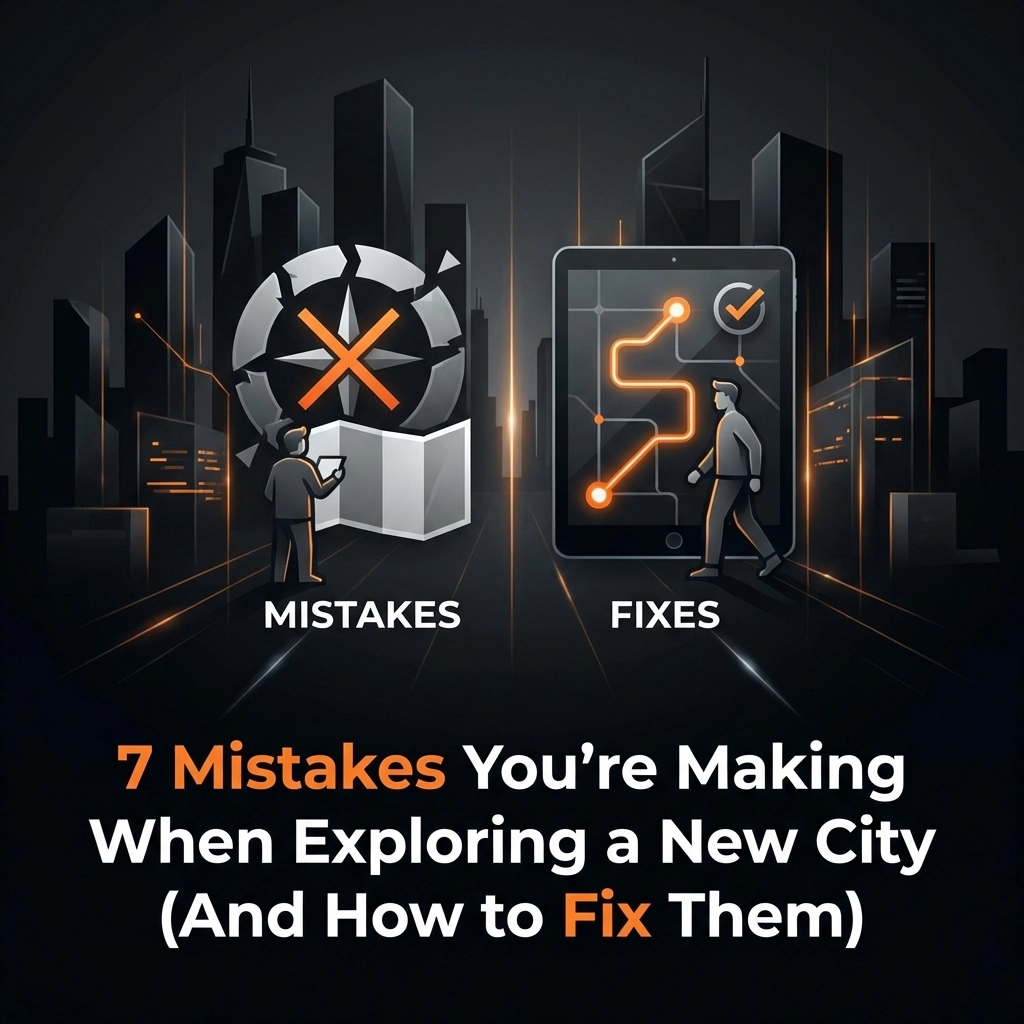
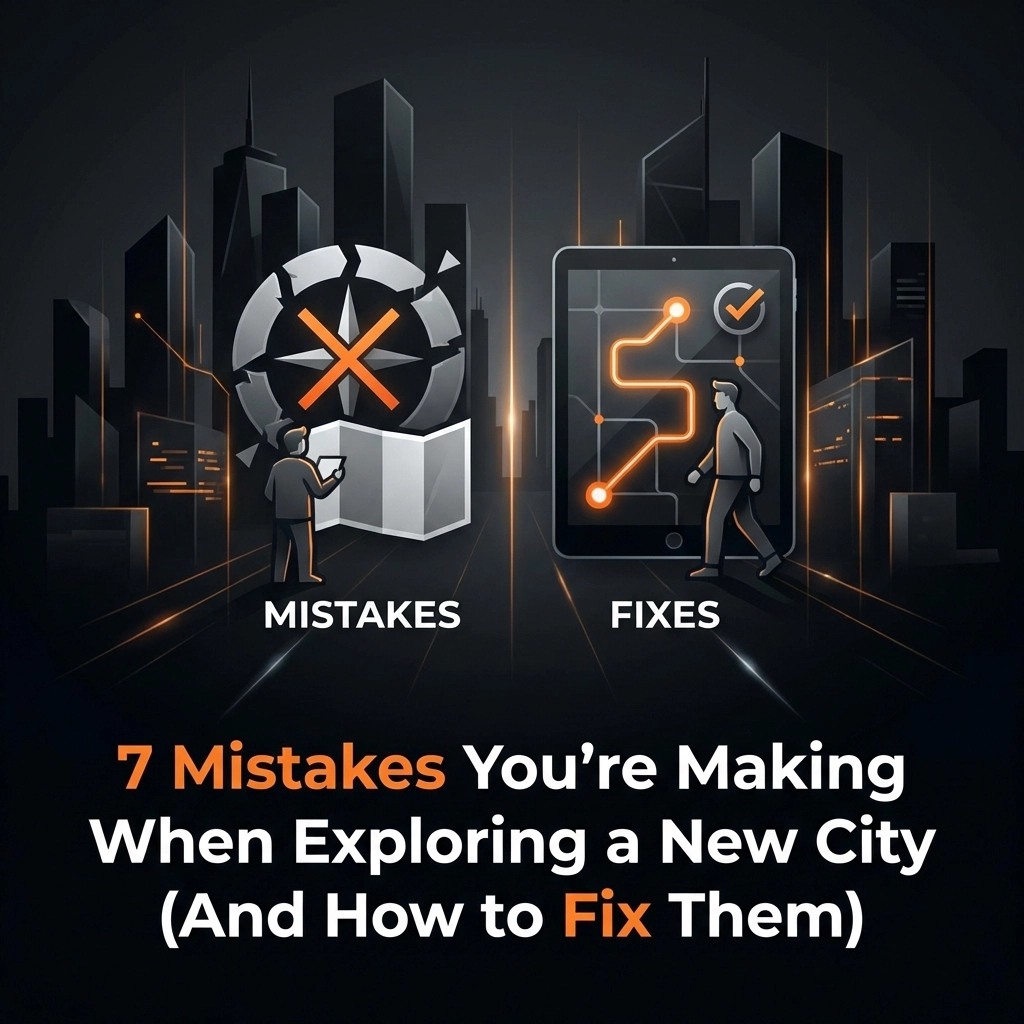
    7 Mistakes You're Making When Exploring a New City (And How to Fix Them)

    You've landed. Bags dropped. Energy high.

    A brand-new city stretches before you. Streets you've never walked. Buildings with stories you've never heard. Food you've never tasted.

    This should be incredible.

    But here's the thing. Most travelers make the same mistakes over and over again. They tick boxes instead of collecting memories. They follow crowds instead of curiosity. They leave cities feeling like they barely scratched the surface.

    Sound familiar?

    Good news: every mistake has a fix. And once you know what to avoid, you'll transform from a tourist into a true explorer.

    Let's break down the seven biggest city exploration mistakes: and exactly how to fix them.


    Mistake #1: Treating Tourist Attractions Like a Checklist

    The Eiffel Tower. The Colosseum. Times Square.

    Famous? Absolutely. Worth seeing? Sure. The only things worth seeing? Not even close.

    Here's the trap. You spend your entire trip rushing between crowded landmarks. Snapping photos. Moving on. By day three, you're exhausted and haven't actually experienced the city at all.

    The Fix:

    Personalize your itinerary. What genuinely interests you?

    Love architecture? Seek out lesser-known buildings with fascinating histories. Obsessed with food? Book a cooking class in a local neighborhood. Into street art? Find the districts where murals tell stories.

    The famous spots aren't going anywhere. But the magic happens when you explore what you actually care about: not what everyone else posts on Instagram.

    image_1


    Mistake #2: Arriving Without Researching Neighborhoods

    Every city has its personality. And that personality shifts dramatically from one neighborhood to the next.

    Skip the research? You might accidentally book accommodation in an area that's inconvenient, unsafe after dark, or simply not your vibe. Worse, you'll miss the neighborhoods that would've blown your mind.

    The Fix:

    Before you arrive, spend thirty minutes learning the lay of the land. Read verified reviews on trusted travel sites. Check which areas locals recommend for dining, nightlife, or peaceful morning walks.

    Once you're there, ask your hotel concierge or hostel staff. They know which streets come alive at sunset and which ones to avoid. Local knowledge beats internet assumptions every time.


    Mistake #3: Trusting Outdated Internet Information

    That blog post recommending the "best hidden café" in Barcelona? Written in 2019. The café closed two years ago.

    The internet is powerful. But it's also frozen in time. Opening hours change. Prices increase. Attractions close for renovation. Entire neighborhoods transform.

    Blindly trusting old information leads to frustration. Showing up to locked doors. Missing reservations you thought you didn't need. Wasting precious time.

    The Fix:

    Verify everything from multiple sources. Check the official tourism board website. Look at recent reviews: last month, not last year. Call ahead for anything time-sensitive.

    Better yet? Use tools that give you real-time, accurate information on the spot. When you're standing in front of a building and want to know its story, outdated blog posts won't help. Technology that works in the moment will.

    image_2


    Mistake #4: Defaulting to Familiar Food Chains

    You're in Tokyo. One of the greatest food cities on Earth. And you're eating at a McDonald's.

    No judgment. Sometimes comfort calls. But making familiar chains your default? That's a mistake.

    Food isn't just fuel. It's culture. History. Connection. Every city has dishes that exist nowhere else. Street vendors perfecting recipes passed down for generations. Tiny restaurants where the owner serves you personally.

    Miss that, and you miss a huge part of understanding where you are.

    The Fix:

    Get adventurous. Seek out local bistros, tavernas, pubs, and street food stalls. Look for places packed with residents: not tourists.

    Ask locals where they eat. Wander side streets. Point at something on the menu you can't pronounce. Some of your best travel memories will happen over meals you never planned.

    image_3


    Mistake #5: Over-Planning Every Single Minute

    8:00 AM: Breakfast at that trendy spot. 9:30 AM: Museum. 12:00 PM: Lunch reservation. 2:00 PM: Walking tour. 5:00 PM: Landmark photo. 7:00 PM: Dinner…

    Sounds productive. Feels exhausting.

    Rigid itineraries leave zero room for discovery. You're so focused on staying on schedule that you walk past the street musician who would've made your day. You skip the courtyard that catches your eye because it's "not on the list."

    Some of the best travel moments? Completely unplanned.

    The Fix:

    Build flexibility into your days. Have a loose idea of what you'd like to do. Then let the city surprise you.

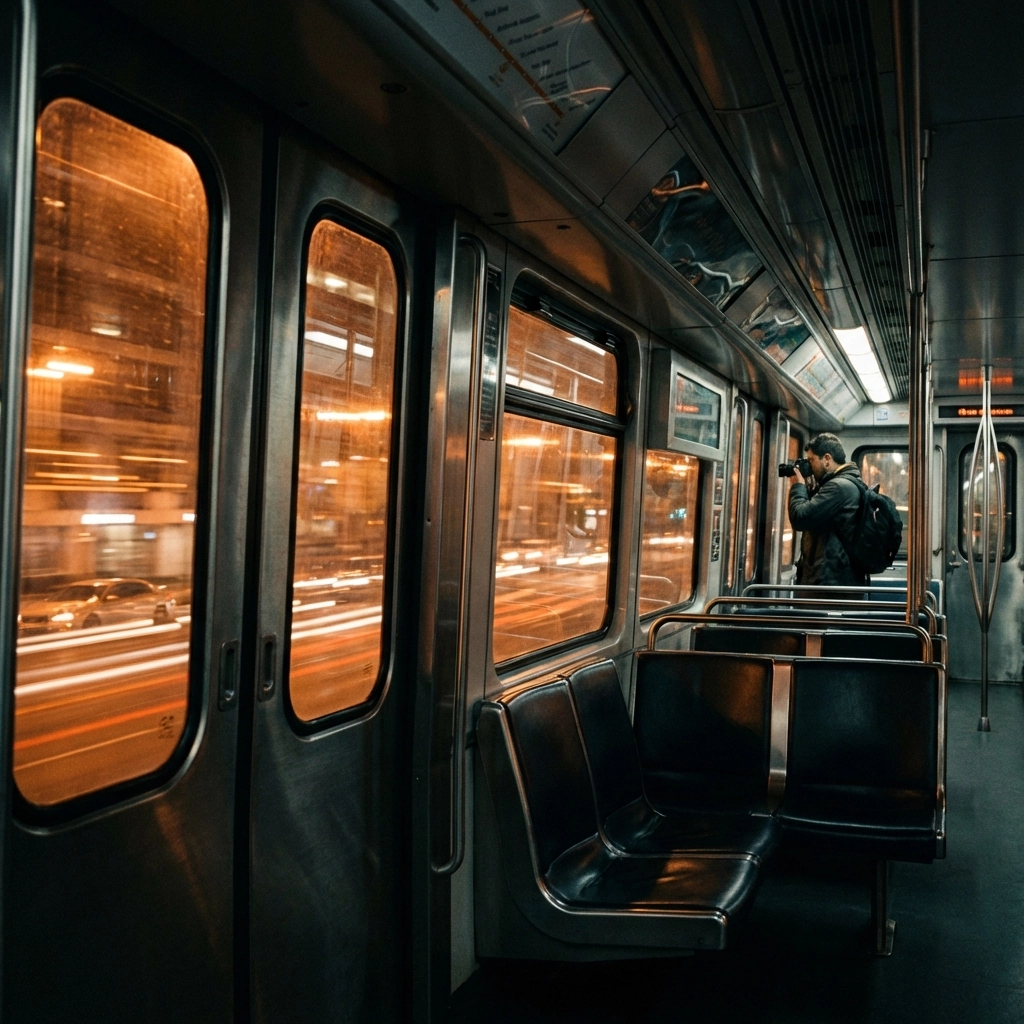
    Wander without a destination. Follow your curiosity down that interesting alley. Sit in a plaza and people-watch for an hour. Jump off the subway one stop early just to see what's there.

    Spontaneity isn't wasted time. It's where the real magic lives.


    Mistake #6: Ignoring Public Transportation

    Walking everywhere sounds romantic. And it is: for about two hours.

    Then your feet hurt. You realize the neighborhood you wanted to explore is forty-five minutes away. You've seen the same six blocks all day.

    Relying only on walking limits your reach. You stay in your comfort zone because everywhere else feels too far.

    The Fix:

    Learn the local transit system. Subway. Bus. Tram. Whatever the city offers.

    It's not as complicated as it looks. Most cities have apps that make navigation simple. A single metro ride can transport you to an entirely different world: new architecture, new food, new energy.

    Public transit is also a window into local life. Watch how residents move through their city. Notice where they get on and off. That's insider knowledge you can't get any other way.

    image_4


    Mistake #7: Skipping Cultural Experiences

    You visited the shopping district. You saw the famous landmark. You took the photos.

    But did you actually understand the city?

    Culture lives in museums, galleries, theaters, and community spaces. It's in the art locals create. The music they play. The stories they tell. Skip all that, and you leave with a surface-level impression at best.

    The Fix:

    Balance the iconic with the cultural. For every famous attraction, add something that teaches you about the city's soul.

    Visit a local museum: even a small one. Catch a live performance. Explore galleries showcasing regional artists. Attend a cultural event if your timing allows.

    And when you pass buildings that intrigue you? Don't just walk by. Learn their stories. Architecture holds centuries of history. That ornate façade? It might have survived wars, revolutions, or complete reinventions of the city around it.

    Curiosity is your greatest travel tool. Use it.


    Explore Smarter, Not Harder

    Here's the truth. Exploring a new city shouldn't feel like work.

    It should feel like discovery. Wonder. Adventure.

    Avoid these seven mistakes, and you'll experience cities the way they're meant to be experienced. Not as a checklist. Not as a blur of crowded landmarks. But as a modern explorer: curious, flexible, and fully present.

    The best travelers aren't the ones who see the most. They're the ones who understand the most.

    So next time you land somewhere new? Slow down. Stay curious. Let the city reveal itself.

    And when you spot a building that sparks your curiosity, don't just wonder about its story.

    Discover it.


    Want to instantly learn the history of any building you encounter? ScanitectAI puts architectural knowledge in your pocket( no tour guide needed.)

  • 7 Mistakes You're Making When Exploring a New City (And How to Fix Them)

    7 Mistakes You're Making When Exploring a New City (And How to Fix Them)

    You've landed. Bags dropped. Energy high.

    A brand-new city stretches before you. Streets you've never walked. Buildings with stories you've never heard. Food you've never tasted.

    This should be incredible.

    But here's the thing. Most travelers make the same mistakes over and over again. They tick boxes instead of collecting memories. They follow crowds instead of curiosity. They leave cities feeling like they barely scratched the surface.

    Sound familiar?

    Good news: every mistake has a fix. And once you know what to avoid, you'll transform from a tourist into a true explorer.

    Let's break down the seven biggest city exploration mistakes: and exactly how to fix them.


    Mistake #1: Treating Tourist Attractions Like a Checklist

    The Eiffel Tower. The Colosseum. Times Square.

    Famous? Absolutely. Worth seeing? Sure. The only things worth seeing? Not even close.

    Here's the trap. You spend your entire trip rushing between crowded landmarks. Snapping photos. Moving on. By day three, you're exhausted and haven't actually experienced the city at all.

    The Fix:

    Personalize your itinerary. What genuinely interests you?

    Love architecture? Seek out lesser-known buildings with fascinating histories. Obsessed with food? Book a cooking class in a local neighborhood. Into street art? Find the districts where murals tell stories.

    The famous spots aren't going anywhere. But the magic happens when you explore what you actually care about: not what everyone else posts on Instagram.

    image_1


    Mistake #2: Arriving Without Researching Neighborhoods

    Every city has its personality. And that personality shifts dramatically from one neighborhood to the next.

    Skip the research? You might accidentally book accommodation in an area that's inconvenient, unsafe after dark, or simply not your vibe. Worse, you'll miss the neighborhoods that would've blown your mind.

    The Fix:

    Before you arrive, spend thirty minutes learning the lay of the land. Read verified reviews on trusted travel sites. Check which areas locals recommend for dining, nightlife, or peaceful morning walks.

    Once you're there, ask your hotel concierge or hostel staff. They know which streets come alive at sunset and which ones to avoid. Local knowledge beats internet assumptions every time.


    Mistake #3: Trusting Outdated Internet Information

    That blog post recommending the "best hidden café" in Barcelona? Written in 2019. The café closed two years ago.

    The internet is powerful. But it's also frozen in time. Opening hours change. Prices increase. Attractions close for renovation. Entire neighborhoods transform.

    Blindly trusting old information leads to frustration. Showing up to locked doors. Missing reservations you thought you didn't need. Wasting precious time.

    The Fix:

    Verify everything from multiple sources. Check the official tourism board website. Look at recent reviews: last month, not last year. Call ahead for anything time-sensitive.

    Better yet? Use tools that give you real-time, accurate information on the spot. When you're standing in front of a building and want to know its story, outdated blog posts won't help. Technology that works in the moment will.

    image_2


    Mistake #4: Defaulting to Familiar Food Chains

    You're in Tokyo. One of the greatest food cities on Earth. And you're eating at a McDonald's.

    No judgment. Sometimes comfort calls. But making familiar chains your default? That's a mistake.

    Food isn't just fuel. It's culture. History. Connection. Every city has dishes that exist nowhere else. Street vendors perfecting recipes passed down for generations. Tiny restaurants where the owner serves you personally.

    Miss that, and you miss a huge part of understanding where you are.

    The Fix:

    Get adventurous. Seek out local bistros, tavernas, pubs, and street food stalls. Look for places packed with residents: not tourists.

    Ask locals where they eat. Wander side streets. Point at something on the menu you can't pronounce. Some of your best travel memories will happen over meals you never planned.

    image_3


    Mistake #5: Over-Planning Every Single Minute

    8:00 AM: Breakfast at that trendy spot. 9:30 AM: Museum. 12:00 PM: Lunch reservation. 2:00 PM: Walking tour. 5:00 PM: Landmark photo. 7:00 PM: Dinner…

    Sounds productive. Feels exhausting.

    Rigid itineraries leave zero room for discovery. You're so focused on staying on schedule that you walk past the street musician who would've made your day. You skip the courtyard that catches your eye because it's "not on the list."

    Some of the best travel moments? Completely unplanned.

    The Fix:

    Build flexibility into your days. Have a loose idea of what you'd like to do. Then let the city surprise you.

    Wander without a destination. Follow your curiosity down that interesting alley. Sit in a plaza and people-watch for an hour. Jump off the subway one stop early just to see what's there.

    Spontaneity isn't wasted time. It's where the real magic lives.


    Mistake #6: Ignoring Public Transportation

    Walking everywhere sounds romantic. And it is: for about two hours.

    Then your feet hurt. You realize the neighborhood you wanted to explore is forty-five minutes away. You've seen the same six blocks all day.

    Relying only on walking limits your reach. You stay in your comfort zone because everywhere else feels too far.

    The Fix:

    Learn the local transit system. Subway. Bus. Tram. Whatever the city offers.

    It's not as complicated as it looks. Most cities have apps that make navigation simple. A single metro ride can transport you to an entirely different world: new architecture, new food, new energy.

    Public transit is also a window into local life. Watch how residents move through their city. Notice where they get on and off. That's insider knowledge you can't get any other way.

    image_4


    Mistake #7: Skipping Cultural Experiences

    You visited the shopping district. You saw the famous landmark. You took the photos.

    But did you actually understand the city?

    Culture lives in museums, galleries, theaters, and community spaces. It's in the art locals create. The music they play. The stories they tell. Skip all that, and you leave with a surface-level impression at best.

    The Fix:

    Balance the iconic with the cultural. For every famous attraction, add something that teaches you about the city's soul.

    Visit a local museum: even a small one. Catch a live performance. Explore galleries showcasing regional artists. Attend a cultural event if your timing allows.

    And when you pass buildings that intrigue you? Don't just walk by. Learn their stories. Architecture holds centuries of history. That ornate façade? It might have survived wars, revolutions, or complete reinventions of the city around it.

    Curiosity is your greatest travel tool. Use it.


    Explore Smarter, Not Harder

    Here's the truth. Exploring a new city shouldn't feel like work.

    It should feel like discovery. Wonder. Adventure.

    Avoid these seven mistakes, and you'll experience cities the way they're meant to be experienced. Not as a checklist. Not as a blur of crowded landmarks. But as a modern explorer: curious, flexible, and fully present.

    The best travelers aren't the ones who see the most. They're the ones who understand the most.

    So next time you land somewhere new? Slow down. Stay curious. Let the city reveal itself.

    And when you spot a building that sparks your curiosity, don't just wonder about its story.

    Discover it.


    Want to instantly learn the history of any building you encounter? ScanitectAI puts architectural knowledge in your pocket( no tour guide needed.)

  • Hello world!

    Welcome to WordPress. This is your first post. Edit or delete it, then start writing!